Grazing for Resilient Landscapes
Two years ago, a small herd of goats moved back into Deià's abandoned pastures. Today, they are one of the valley's most effective tools against wildfire.
When people think about wildfire prevention, they often imagine fire trucks, helicopters and emergency response teams. Yet for most of Mediterranean history, one of the most effective preventive tools walked on four legs.
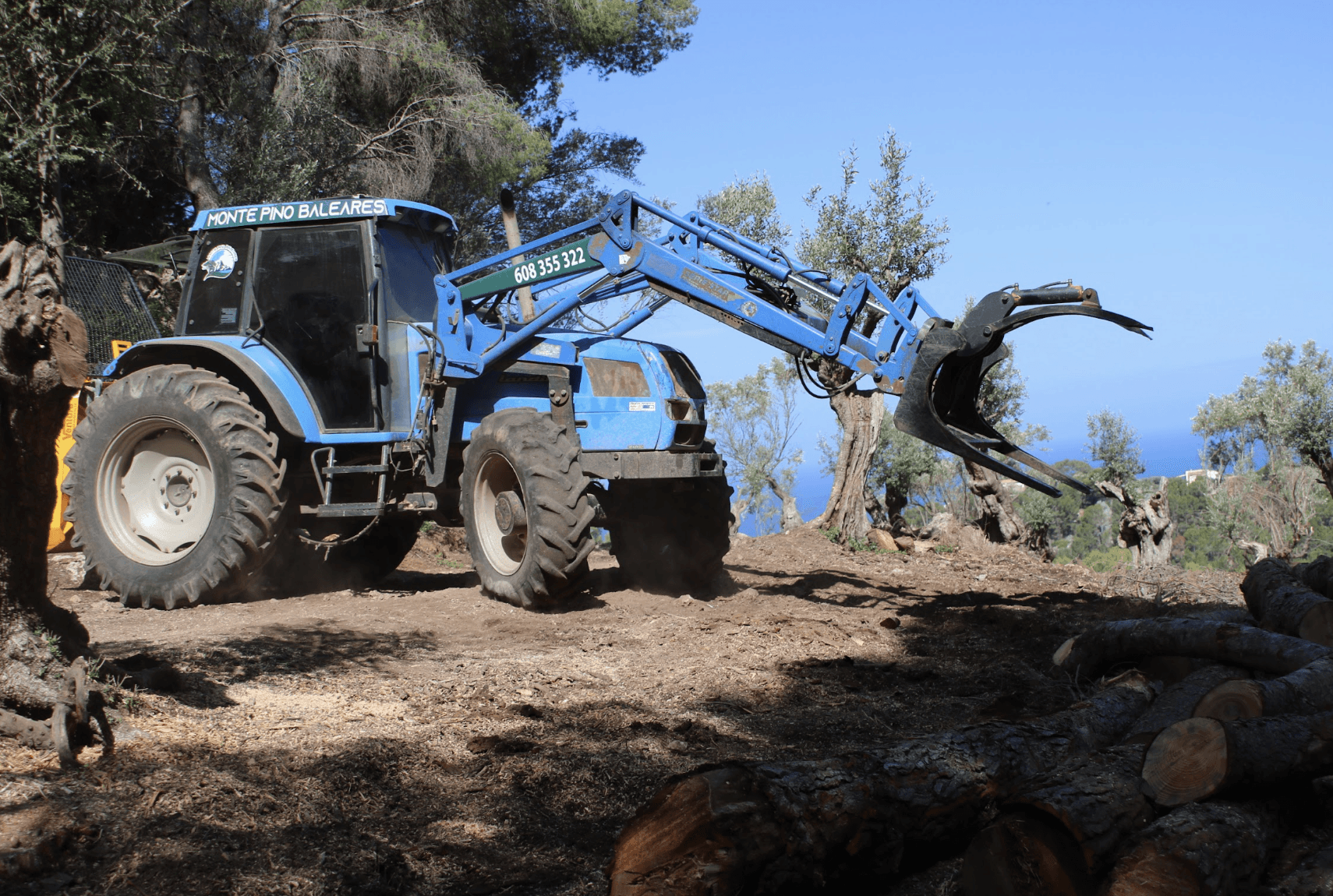
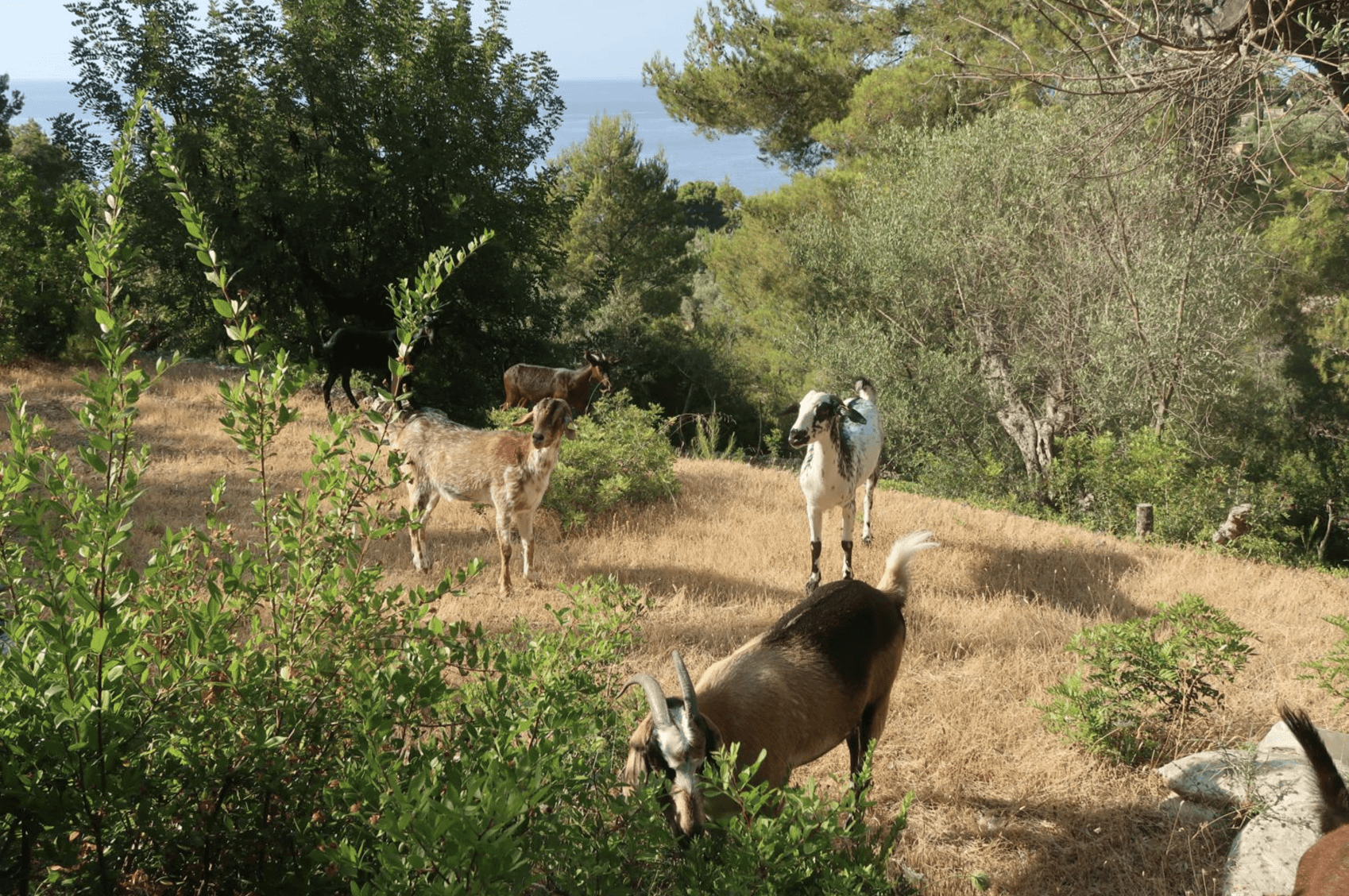
Inspired by the Catalan initiative Ramats de Foc, Regenera Deià began its own grazing project two years ago. We gave a small herd of goats a home, started clearing our own land and our neighbours', and built a routine: grazing every evening, during the last three hours before sunset, moving through abandoned areas, properties and paths. It is largely a practice of observation — reading the land, going where it is most needed, giving plants time to recover. Giving something back to the ecosystem we are part of is central to why we do it.
Old Allies, Old Landscape
Grazing animals — goats, sheep, donkeys — were once essential to a well-managed Tramuntana landscape. They were not only a source of food, wool and income; they were active land managers, cared for because they sustained life, not because they were passive assets. Moving across terraces, forest edges and mountain slopes, they consumed the vegetation that would otherwise accumulate as fuel, helping maintain the mosaic that defined the Serra for centuries.
Much of that grazing activity has since disappeared. As tourism drew people away from traditional agriculture, rural populations shrank and grazing areas were abandoned. Shrubs expanded, young pine forest spread into old farmland, and vegetation grew denser. The result is a landscape carrying far more continuous fuel than it once did — a change with consequences well beyond fire risk: dense vegetation competes for scarce water, reduces habitat diversity, and in many places is pushing out the open ground that pollinators, birds and native plants depend on.
Reintroducing grazing is one of the most effective and natural ways to address these challenges. At Regenera Deià, the concept of Guerrilla Grazing explores how carefully managed animals can once again become partners in landscape regeneration.
More Than Vegetation Management
This approach is increasingly recognised across southern Europe, as conservationists, foresters and fire specialists rediscover what rural communities once understood intuitively: animals can do ecological work that is difficult, expensive, or simply impossible to replicate with technology alone.
But Guerrilla Grazing is about more than vegetation. It raises a broader question about the future of rural economies. If grazing becomes economically viable again, it can support local farmers, create new livelihoods, and strengthen the connection between communities and the landscapes they inhabit. Grazing, in other words, is not simply a conservation tool — it is part of a wider regenerative strategy that links ecology, culture and economy, and healthy landscapes need care that is backed by activities capable of sustaining themselves over time.
Zooming In: Guerrilla Grazing in Deià
The name guerrilla grazing provokes all kinds of reactions the first time people hear it — from images of jungle warfare, to tropical gorillas, to weariness at yet another trendy label for a practice that has existed for millennia. Whatever your first reaction, what matters to us is what you think of our approach to caring for Deià's abandoned land.
It is not simply a way of making use of poor pasture or managing spontaneous vegetation with animals. It is a way of keeping our forests safer, helping biodiversity thrive, and preserving an ancestral farming heritage — a modern name for a practice that emerged, quite simply, from the need to act.
Three years ago, ABOCA Verds was born from that same urgency: olive groves left unmanaged had gradually become fire-prone pine forest, and a young couple felt the pull to do something about it, with the hope of one day producing a good goat cheese along the way. While we wait for our goats to be ready to milk, they are already doing essential work managing the pine understory on the western side of the municipality.
Two weeks ago, our first flock of Ovella Roja Mallorquina — the native Majorcan sheep breed — arrived, bringing a second, complementary set of grazing habits to the guerrilla.
Why "Guerrilla"?
The guerrilla in the name refers to carrying out occasional, targeted grazing interventions wherever and whenever they are most needed. We concentrate our animals on the plots we judge to require the most urgent management: land alongside public and private paths, streams and roads, where fire risk is highest.
This high-intensity, carefully managed technique benefits both land and people. It reduces the dense shrub understory, helps restore balance between vegetation layers — supporting biodiversity — allows pasture to recover instead of degrading through overgrazing, contributes to carbon sequestration, and helps prevent soil erosion and water evaporation. As a bonus, the animals disperse seeds, conveniently packaged in their own natural fertiliser.
And here is our best-kept secret: the animals love it. Constant access to fresh, varied vegetation improves their health and wellbeing, and reduces our need to import forage from elsewhere on the island — or the mainland — as well as our dependence on commercial feed.
Guerrilla grazing is a land management technique that is sadly disappearing, as extensive livestock farming declines and industrial models take its place. Extensive, conscious, rotational grazing systems that respect animal welfare are becoming rare, and with them, the traditional knowledge, skills and rural culture that once surrounded them. This is one of the reasons we believe it is so important to bring this way of caring for the land back.
Introducing GPS Collars
One of the newest additions to our guerrilla is invisible fencing technology. Our herds wear GPS collars, which let us create and move virtual grazing areas without building permanent fences — giving us the flexibility to respond quickly to changing conditions and direct the herd precisely where their work is needed most, while minimising disturbance to the landscape. For us, the collars do not replace good shepherding; they are another tool that helps us manage the land more effectively, improve animal welfare through adaptive grazing, and make this traditional practice viable again in the 21st century.
One of the collars' greatest advantages is the ability to create exclusion zones within a grazing area — virtual boundaries that protect young trees, dry-stone terraces, sensitive habitats or any feature of ecological or cultural value, while the animals continue grazing freely around them. This precision makes conservation and grazing fully compatible, and the flexibility of virtual fencing lets us expand guerrilla grazing across the municipality: rather than one large herd in a single place, we can rotate several smaller herds at once, targeting priority areas as conditions shift through the year. The result is faster response to fire risk, more efficient vegetation management, and a better balance between grazing pressure and ecosystem recovery.
We, as humans, need to relearn that we are not the centre of the world — that slowing down is, in many ways, the answer to the interconnected problems we face, and that managing an ecosystem from within means understanding ourselves as part of it. Deià's future resilience depends on this understanding: on what we build, and on what we are willing to bring back.