From a handful of raised beds in an open field to the first seed of a much larger agricultural future.
There are many reasons why someone joins a community garden. But before any of them comes a simpler idea: an open space, a shared space, a place for conversation and collective creation. Somewhere between private and public, people gather to bring ideas, skills and motivation into growing something new, together.
It is perhaps no surprise that people so often describe gardening and writing as closely related practices. Both require patience, attention, cultivation and care — for ideas, for people, and for the environments we inhabit. Community gardens are not simply about growing vegetables, nor are they a distraction from environmental and political crises. They are spaces of care, kindness and hope: places where we learn reciprocity, practise stewardship, and remember that productivity is not always the measure that matters.
Building Community: Weaving Practice, Theory and People
A resilient community is not built through infrastructure or economic activity alone, but through relationships — between neighbours, generations, cultures and the land itself. For centuries, food production was woven into everyday life in Deià. Gardens, orchards and terraces were not only sources of nourishment; they were places of knowledge, cooperation and cultural continuity. Today, much of that connection has faded. Agricultural knowledge is disappearing, productive land is being abandoned, and food increasingly arrives from far beyond the island.
Community gardens offer a way to restore these relationships. More than places to grow vegetables, they are shared spaces where people cultivate food, exchange knowledge, care for the land and build connections across generations and backgrounds. They transform underused land into productive commons that strengthen biodiversity, improve soil health, reconnect people with seasonal cycles, and encourage participation in the stewardship of the local landscape.
Their value extends beyond ecological restoration. In times of social fragmentation, economic uncertainty and environmental crisis, community gardens strengthen local resilience by creating opportunities for cooperation, mutual learning and collective responsibility. They remind us that regeneration is not carried out by experts alone, but is a practice rooted in everyday acts of participation and care.
Seen this way, a community garden is not simply a place. It is a living practice of reciprocity, stewardship and belonging — a small but tangible expression of the regenerative future we are cultivating together.
Cultivating Es Jonquet
The Es Jonquet Community Gardens are much more than a place to grow vegetables or meet people from the village. They are a living learning space, where neighbours share knowledge, learn from one another's successes and mistakes, explore new growing methods, and, most importantly, put into practice what they learn by experimenting on their own plots.
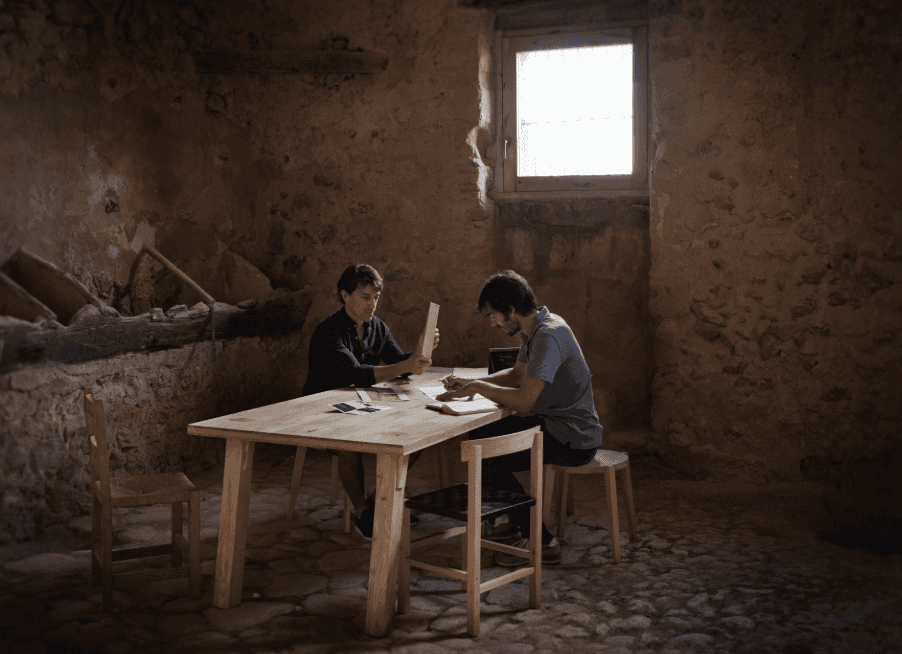
This philosophy is rooted in experiential learning: the idea that knowledge is best acquired through direct experience. More than a century ago, the Mallorcan educator Guillem Cifre de Colonya championed exactly this — that education should cultivate autonomy, curiosity and practical skill rather than simply transmit information. We believe learning by doing remains the most effective way to build lasting knowledge and confidence.
ABOCA Verds, which coordinates and manages the community gardens, organises monthly workshops and courses on organic growing, permaculture, soil health, composting, water management, seed saving, agroforestry and other regenerative land-use practices, led both by members of the association and by invited farmers, educators and practitioners. The sessions are open to everyone — not only plot holders, but neighbours, local growers and anyone curious about a more conscious relationship with the land.
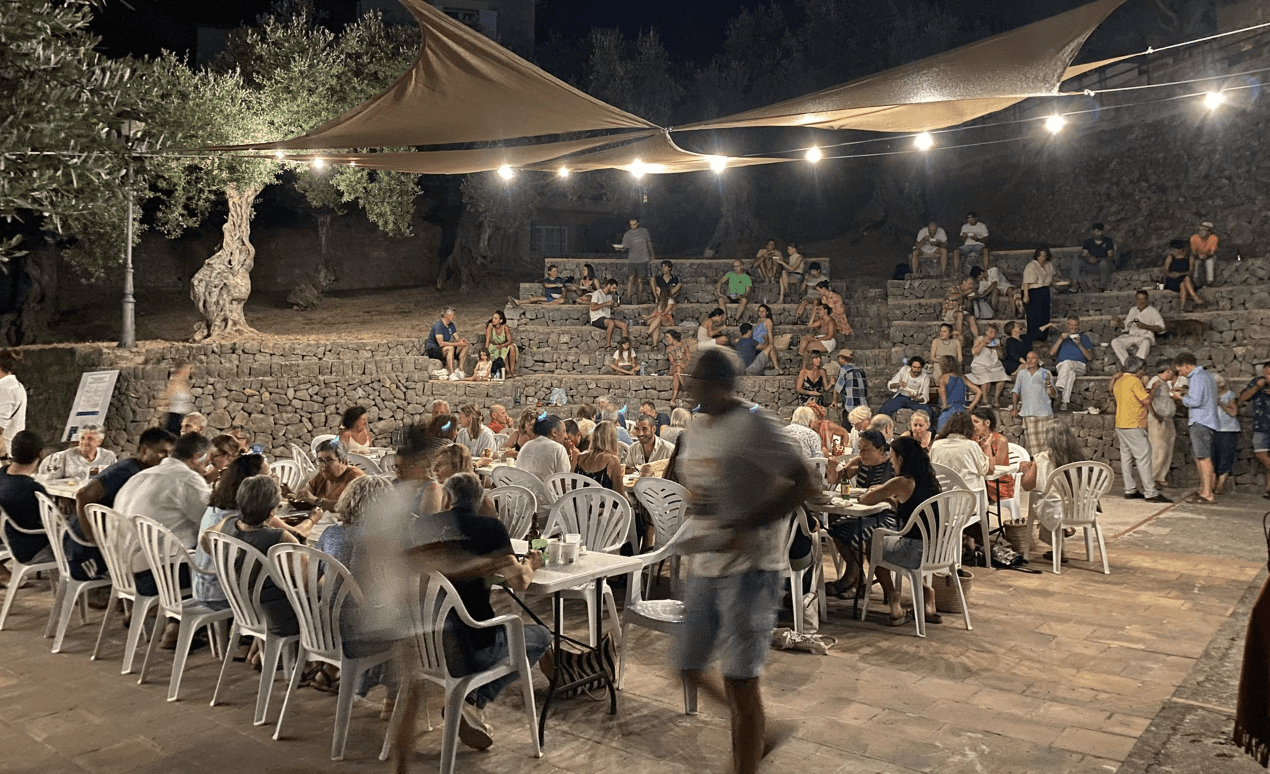
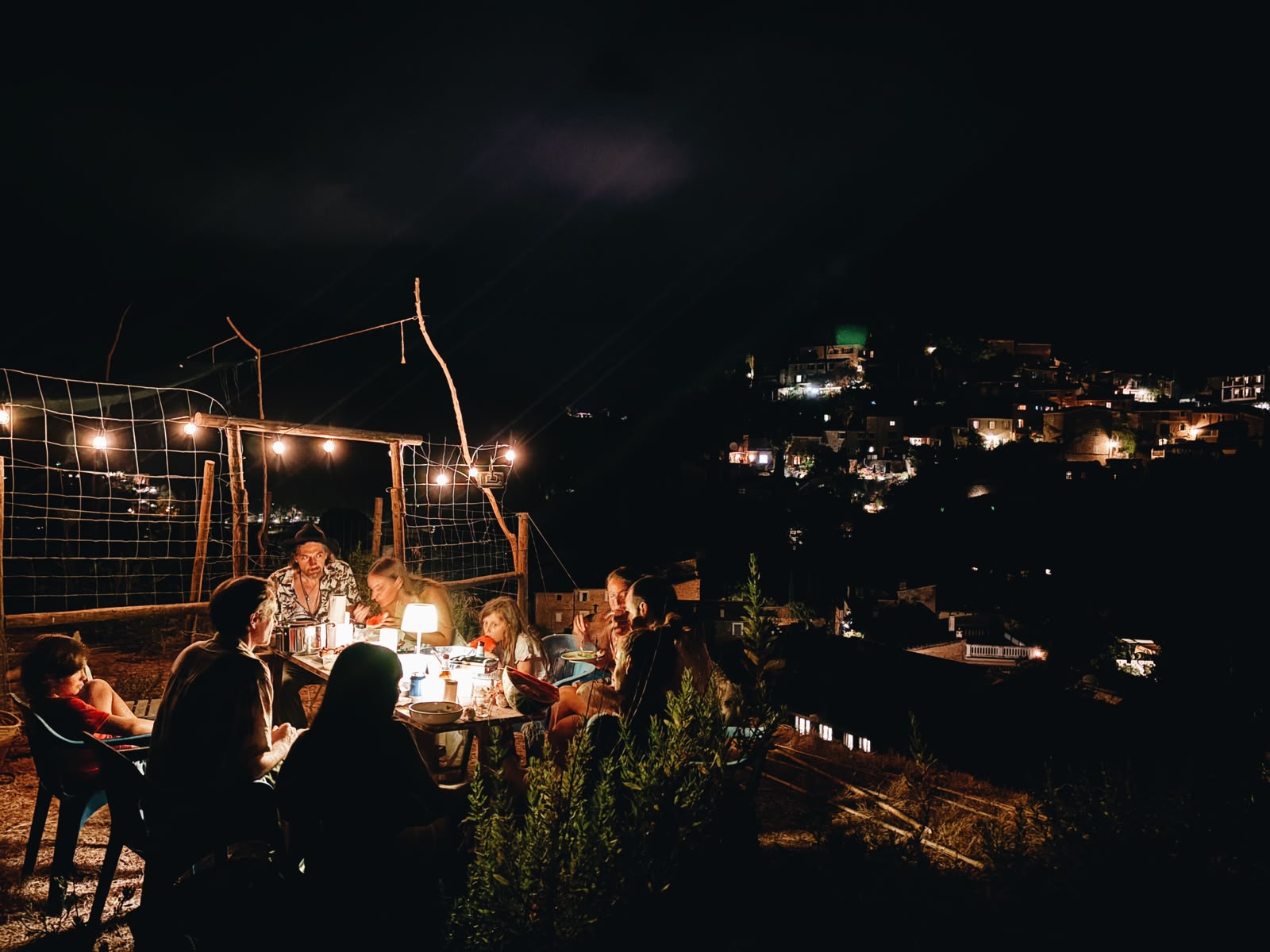
Beyond the practical knowledge, these gatherings create space for spontaneous conversation, exchange and connection. In a small rural community, these informal networks are as valuable as the vegetables we harvest — they are what build a more resilient, cooperative community with a renewed culture of care, for people and for land alike.
A Glimpse Into the Future
When we look at the road ahead, the first impulse is to dream big — of abundant landscapes, thriving communities and ambitious projects. And rightly so: that is where the best ideas begin. But it is equally important to keep our roots firmly in the ground, and move forward patiently, seed by seed, terrace by terrace.
Thanks to the generosity and trust of the landowners, who have granted the use of the property to Regenera Deià, we are delighted to announce that the first seed has already been planted. It is now quietly taking root, ready to grow into something much bigger.
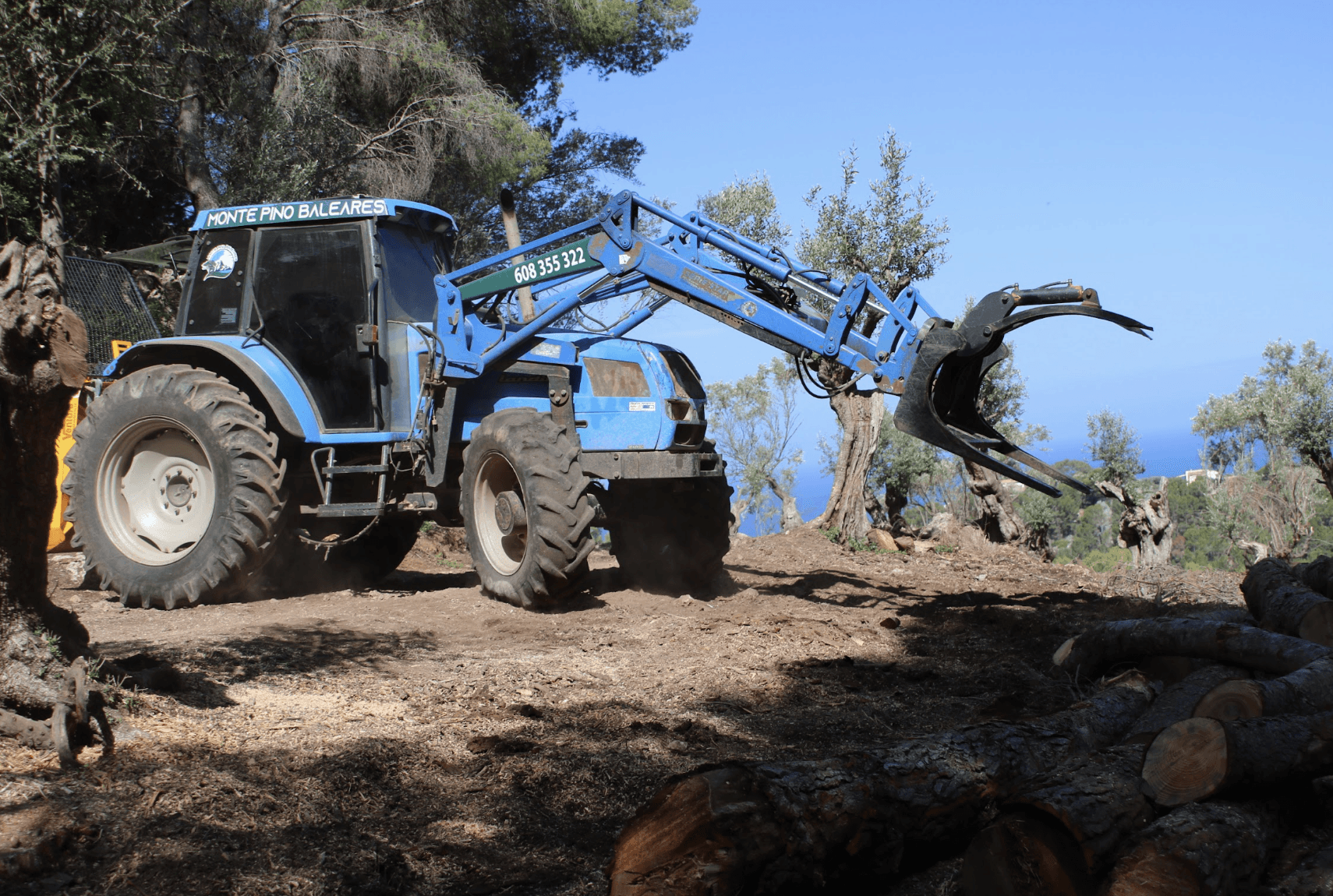
Next steps include restoring several collapsed dry-stone terraces and securing the property's perimeter fencing — essential measures to bring this corner of the village back into active cultivation and allow the project to grow beyond the current community garden. The fencing matters because the herds of feral goats that roam the area can undo months of work in a single night. The terraces matter because dry-stone walls prevent erosion, slow the run-off of rainwater and help the soil hold on to moisture — all critical to the land's long-term recovery.
This vote of confidence in Regenera Deià reflects the success of the community gardens and the wider vision for the landscape that has grown around them. It opens the door to a new phase of agricultural regeneration on the property. Technical details of the expansion — cultivation models, land-use strategy — will follow, always in close collaboration with the landowners.
The principles behind these gardens will guide every step of this next chapter. The ambition is to build a living laboratory for regenerative agriculture, education and landscape restoration — not only for Deià, but for the wider Serra de Tramuntana. Beyond producing healthy food and strengthening community ties, the site will show how regenerative practices can help growers build more diverse, productive and drought-resilient plots, improve biodiversity, restore soil health, and adapt to a changing climate.
A garden begins with a single seed, a shared plot, a handful of neighbours willing to show up. What grows from it is education, biodiversity and a community that trusts itself to shape its own future.